Application numbers have never been higher. Across the Jobtrain platform, application volumes tripled between 2021 and 2024. For graduate employers, they receive an average of 140 applications per vacancy, the most since records began in 1991.
And yet many organisations still have problems filling frontline roles or retaining the people they do hire - that's especially true in care.
This is the quantity vs quality problem. The answer isn't fewer applications, it's about getting more of the right ones and a faster route to a good decision.
What is the quantity vs quality problem in recruitment?
The quantity vs quality problem is when a high volume of applications fails to turn into suitable, committed hires. Recruiters spend more time sifting through unsuitable candidates and less time with the people most likely to succeed and become a colleague.
It's become worse for four main reasons:
- Applying is easier than ever. One-click apply means a jobseeker can send dozens of applications in an evening without even having to really think about it.
- AI writes the applications. Only 10% of UK professionals say they don't use AI at any stage of applying for a job, and 28% of hiring managers report more applications from unqualified candidates (Robert Half, 2026).
- Generic adverts attract generic interest. A vague job description gives people no reason to rule themselves out.
- As recruiters, we still measure the wrong thing. Success is often judged by how full the pipeline looks, not by who starts and stays.
Why does quality matter so much in care recruitment?
In care, a poor-fit hire usually means recruiting twice for the same role and the domestic talent pool to recruit from is shrinking.
On paper, things are improving. Skills for Care's latest data puts the adult social care vacancy rate at 6.2% in 2025/26, the lowest since 2015/16. But that still means around 96,000 vacancies on any given day, roughly three times the rate in the wider economy.
Underneath that headline, the pressure is building:
- Posts filled by British nationals fell by 40,000 last year and by 130,000 since 2020/21.
- New international recruits fell to 30,000 in 2025/26, down from 105,000 two years earlier.
- Employers can no longer sponsor new care workers from overseas and the route closes completely in July 2028.
- The sector will need a further 410,000 posts by 2040.
Providers now have to win over more candidates at home, many of them career changers with no care experience. That makes getting the right person first time critical. Skills for Care data shows that care workers are most likely to leave in the first year of their role.
Quality in care also looks different. It's less about qualifications and more about values, temperament and resilience. A CV, especially one polished by AI, tells you very little about how someone will respond to a distressed resident at 3am.
“We did find that sometimes interviews weren’t the most thorough. That freed us up to create a toolkit that supports the managers at interview and it’s really helped with our attrition rates too.”
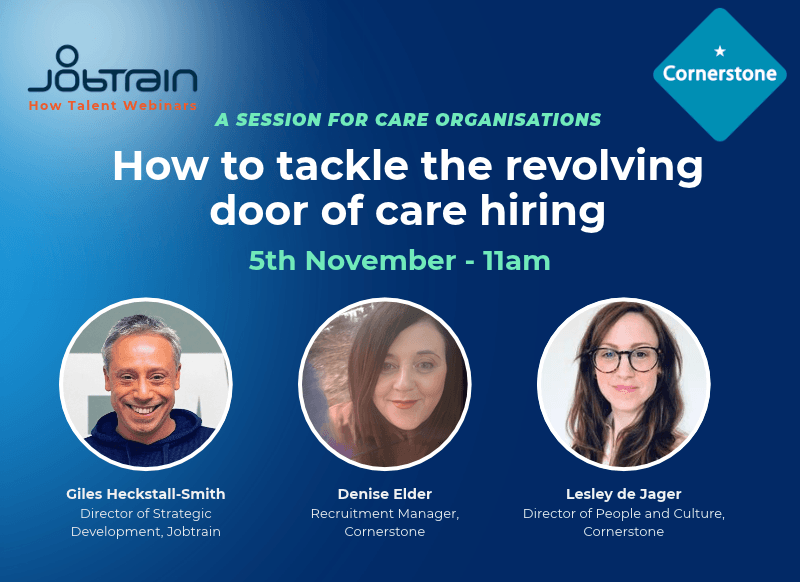
Denise Elder, Cornerstone Care
Is the quantity vs quality problem only affecting care?
No. Care feels it most sharply, but the same pattern shows up wherever roles attract high volumes.
Graduate recruiters are seeing record application numbers. 67% of UK hiring managers say AI-generated applications have made hiring take longer, and over two-thirds say checking for AI-written content has added time to their process (Robert Half, 2026).
The NHS, local government, housing, education and charities all hire for high-volume, frontline roles where values matter as much as experience. The lessons below apply just as well there.
What does chasing volume really cost?
Chasing volume costs time, candidates and money, often without anyone even noticing.
- Recruiter time. Every unsuitable application still has to be read and rejected.
- Slower decisions. Care candidates often apply to several providers at once and the first good offer usually wins.
- Lost talent. Strong applicants get buried in the pile and accept a job elsewhere.
- Poor candidate experience. Applicants who hear nothing back remember it and they'll tell others.
- Early turnover. A rushed or poorly matched recruit is likely to leave and the cycle starts again, costing time, money and resource.
High volume doesn't have to mean slow hiring, though. Even with application volumes tripling since 2021, average time to hire on the Jobtrain platform has fallen to 70.4 days, a five-year low. With the right process, volume can be managed.

How do you balance quantity and quality in recruitment?
Shift your effort from sifting volume to attracting and converting the right people. These six steps will help.
1. Write honest, specific job adverts
Describe the realities of the role: the shifts, the tasks, the emotional demands, the pay and the chance to progress. A realistic picture helps the wrong people rule themselves out and the right people rule themselves in. Words matter here: 52.7% of candidates say written content convinced them to apply, compared with 18.5% for video.
2. Screen for values, not just CVs
Add a few short, values-based questions early on, such as "What would you do if a resident refused their medication?" Answers like these reveal far more than a CV. Social Care Wales links values-based recruitment to higher job satisfaction, stronger commitment and better retention.
3. Keep the application short
Only ask for what you need to decide whether to take someone forward. Long, complex forms are one of the biggest reasons people give up on an application and frontline candidates are often applying on their phones between shifts.
4. Move fast on the right people
Automate acknowledgements, shortlisting rules and interview booking. That frees recruiters to spend their time with promising candidates instead of on admin and gets offers out before a competitor does.
5. Build talent pools and look internally first
Keep in touch with strong candidates who just missed out and give existing staff a clear route to new roles.Internal hires by organisations using the Jobtrain platform have risen from 12.8% to 21.4% since 2021, while agency hires have fallen from 8.1% to 2.3%.
6. Measure quality, not quantity
Track what happens after someone applies, not just how many applied. Then put your budget into the channels that bring in people who start and stay.
What should you measure instead of application numbers?
Measure how well applicants turn into lasting hires. These six measures give a far clearer picture than raw volume:
- Application to interview rate: how many applicants are worth meeting.
- Interview to offer rate: whether shortlisting is picking the right people.
- Offer to start rate: how many offers turn into people turning up on day one.
- Time to hire: how quickly you get to a decision.
- First-year retention by source: which channels bring people who stay.
- Hiring manager satisfaction: whether new starters meet expectations.
From more to better
The quantity vs quality problem won't go away on its own. AI tools will keep making it easier to apply and in care, the pool of available workers will keep getting tighter.
The organisations that come out ahead won't be the ones with the most applications. They'll be the ones that attract the right people, make quick and confident decisions and keep the people they hire.
Want to see what's changing in candidate behaviour? Download the latest Jobtrain Talent Insights Report for sector-by-sector data from 12,500 vacancies and more than 10,000 jobseekers.

Frequently asked questions
What's the difference between quantity and quality in recruitment?
Quantity is the number of applications you receive. Quality is how many of those applicants are suitable, accept an offer and go on to perform well and stay. A high volume of applications doesn't guarantee good hires, and can make them harder to find.
How do you improve quality of hire in high-volume recruitment?
Write honest, specific job adverts, screen early for values and essential criteria, keep applications short and move quickly on promising candidates. Then measure which sources produce hires who stay, and invest in those.
How can care providers reduce early staff turnover?
Give candidates a realistic picture of the role before they apply, recruit for values as well as skills and support new starters with a structured induction. Skills for Care data shows staff in their first year are more than twice as likely to leave as those with 10 years' experience.
How should employers deal with AI-generated job applications?
Rely less on the CV alone. Short screening questions, situational or values-based questions and early conversations make it much harder for a polished but unsuitable application to get through.
What recruitment metrics matter more than application numbers?
Application to interview rate, offer to start rate, time to hire, first-year retention by source and hiring manager satisfaction all tell you more about recruitment success than how many people applied.